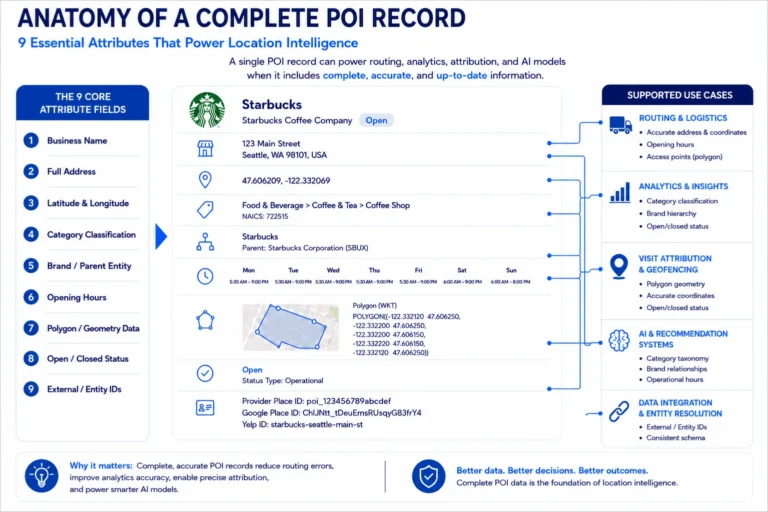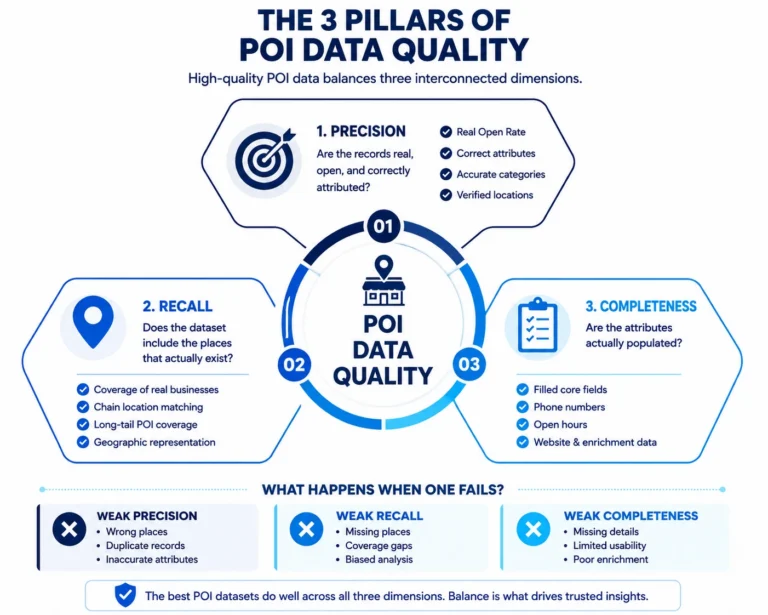
Points of interest (POI data) are foundational to a geospatial data ecosystem. As a key pillar of location data, POIs provide the geographic coordinates of non-residential places for mapping and analytics. While the latitude and longitude of POIs are core to locating these non-residential places, what many data scientists find most valuable when analyzing this data is detailed brand attribution for location data.
What is Brand Attribution?
In the context of POI data, Brand attribution refers to the process of accurately identifying, classifying, and linking physical locations to the brands (or chains) and parent companies that operate them.
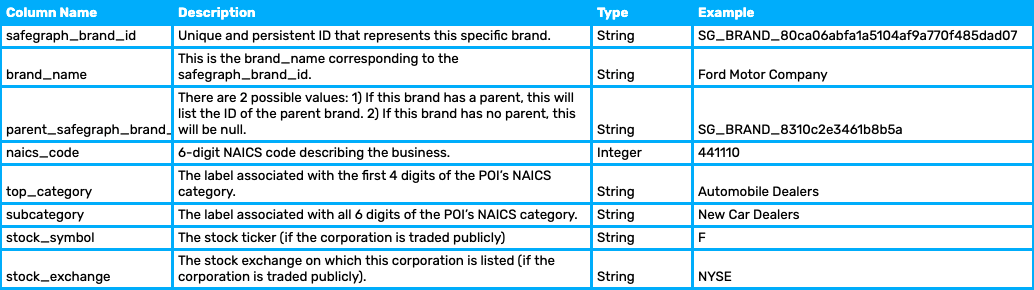
SafeGraph Places data includes a brand information CSV file with detailed brand attribution POI data for stores with multiple locations. This file includes a unique and persistent SafeGraph Brand ID, enabling data scientists to easily join POIs belonging to the same brand.
It also includes brand name and parent brand ID fields, making it possible to identify relationships between parent and child brands. Finally, the brand information CSV provides NAICS codes and categories, as well as stock tickers and exchange details, allowing users to roll up brands into specific industries and market segments more reliably.
Why is Brand Attribution Important?
Why brand attribution matters in POI analysis becomes clear when POIs are used for strategic decision-making. When done correctly, brand attribution POI essentials allow POIs to be analyzed with greater precision and confidence.
At SafeGraph, many customers use brand information for the following reasons:
1. Identifying parent and child brand relationships
One of the most compelling reasons for detailed brand attribution in POI data is the ability to identify parent and child brands accurately. A parent brand typically refers to a corporate entity that oversees multiple subsidiary or child brands.
A good example is Kroger, which is the parent brand for grocery chains such as Fry’s, Fred Meyer, Harris Teeter, and Smith’s. Most POI datasets provide only parent or child brands, which limit the types of analyses that can be conducted. Others include inconsistent mixes of both, which can lead to inaccurate calculations that underpin larger decision-making processes. When both parent and child brands are included consistently, data scientists can roll up or drill down to the appropriate level depending on their use case.
Analyzing parent and child brand relationships allows data scientists across organizations to better understand the market landscape. Sysco, a global leader in food distribution, relies on parent-child brand attribution in POI data to analyze market dynamics at both levels, identifying brands experiencing spikes or declines in demand.
Without curated parent and child brand attribution, Sysco would need to dedicate significant internal resources to manipulate data manually or risk missing critical insights. With accurate attribution, they can monitor market trends, evaluate growth opportunities, and decide where to focus efforts on a weekly basis.
2. Understanding brand affinities
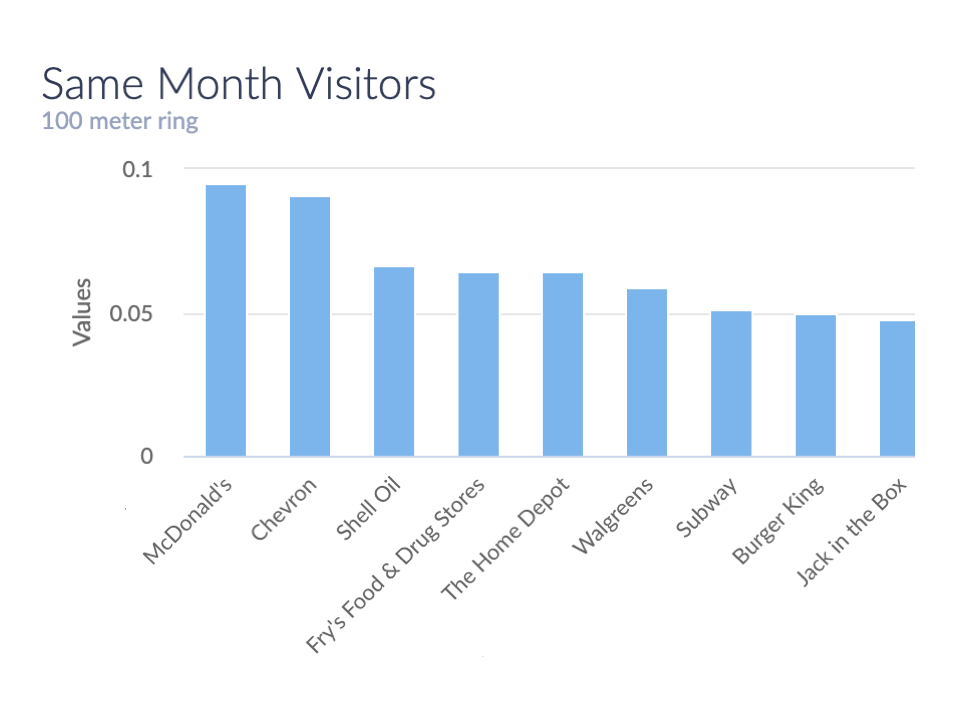
The right brand attribution in POI data enables companies to understand consumer behavior in relation to specific brands, helping them build stronger customer affinity profiles.
Brand affinity analysis is particularly useful for advertisers seeking to deliver targeted and personalized messaging to consumers who frequent specific brand locations. Media Storm, the second-largest independent full-service media agency in the U.S., incorporates brand attribution for location data into its location-based marketing workflows.
Using SafeGraph’s brand information and NAICS codes, Media Storm can identify client store locations, as well as competitor and complementary brands, allowing advertising efforts to focus on the places most visited by the target audience.
3. Mapping market penetration
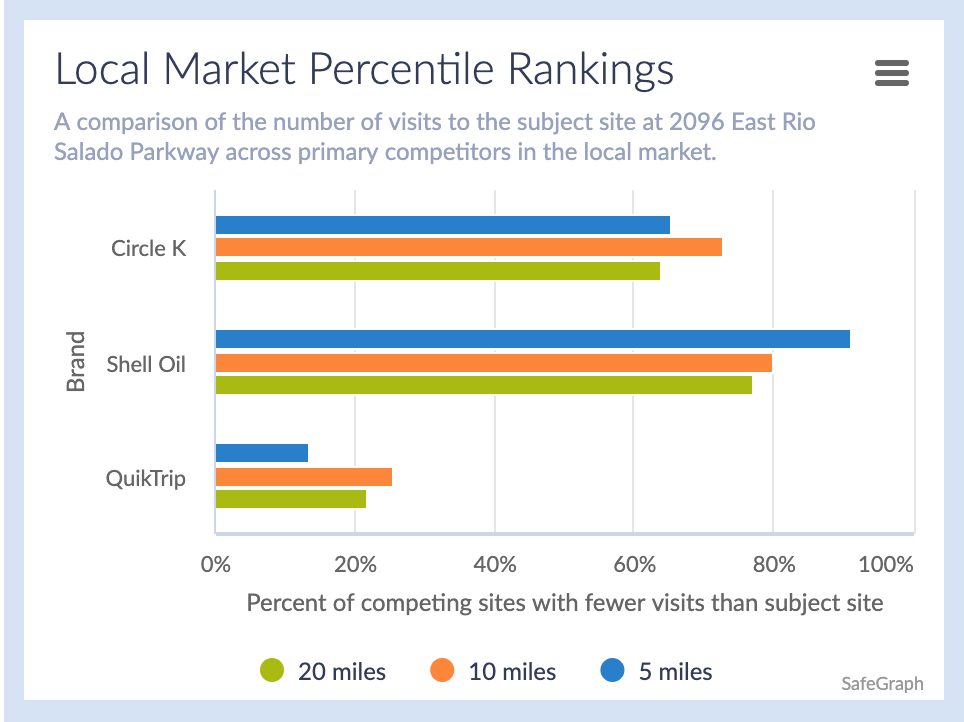
Brand attribution POI essentials are critical for mapping and understanding brand presence across markets. Competitive analysis, site selection, and trade area creation are all more effective when POI data includes comprehensive and accurate brand attribution.
If a POI is attributed incorrectly or the brand information is missing, areas of opportunity may be overlooked or overstated. Inconsistent parent and child brand data can cause POIs to be missed, or mis-weighted in analysis.
For example, a market analyst planning an aggressive ad campaign to gain share from a competitor needs to know where that brand has a regional stronghold. If brand attribution is incomplete or incorrect, results will be skewed and decisions compromised.
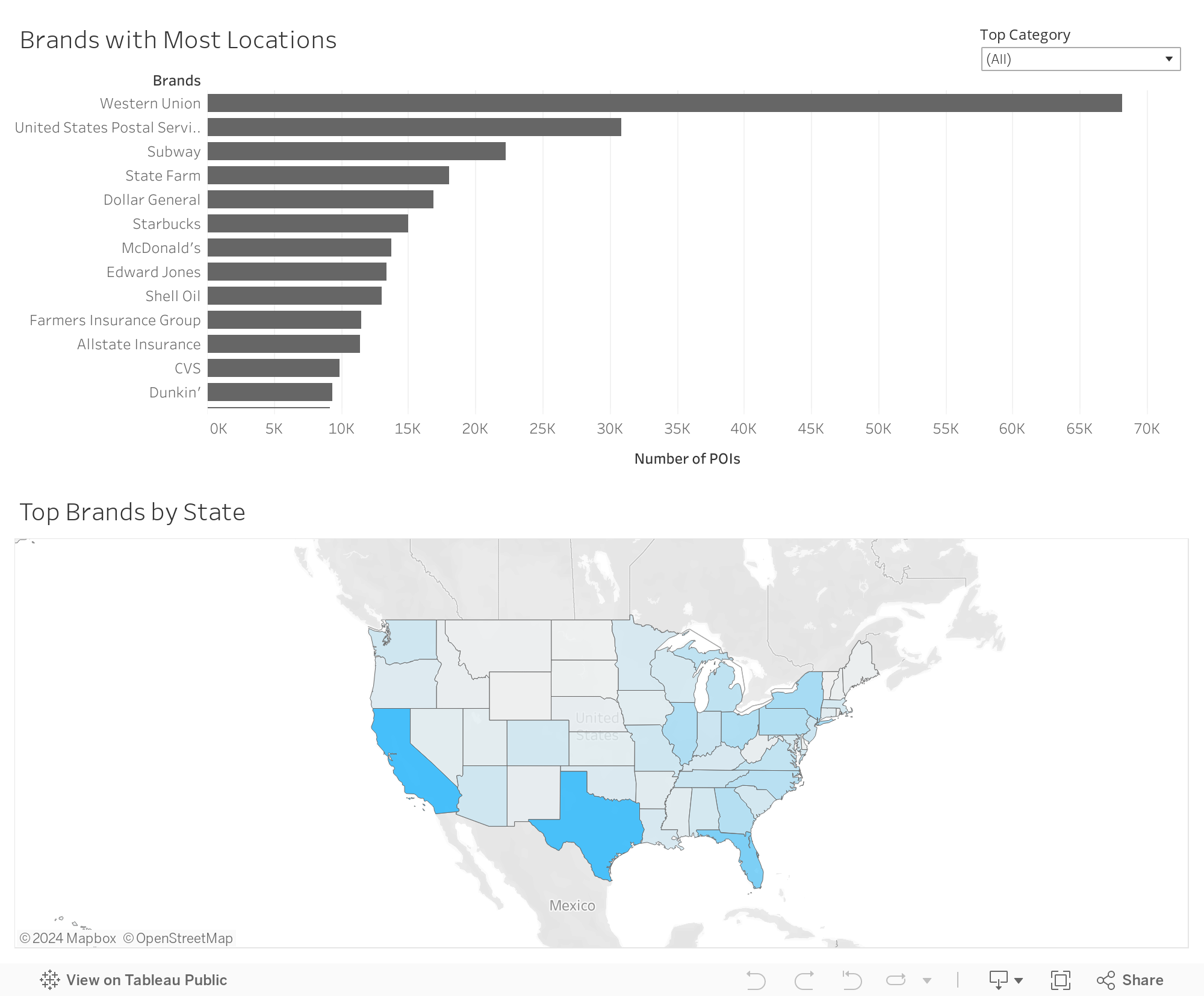
To address this, SafeGraph provides extensive brand coverage for places in over 200 countries & territories globally.. Users can explore this data through the brand dashboard, which offers visibility into top brands at national and state levels.