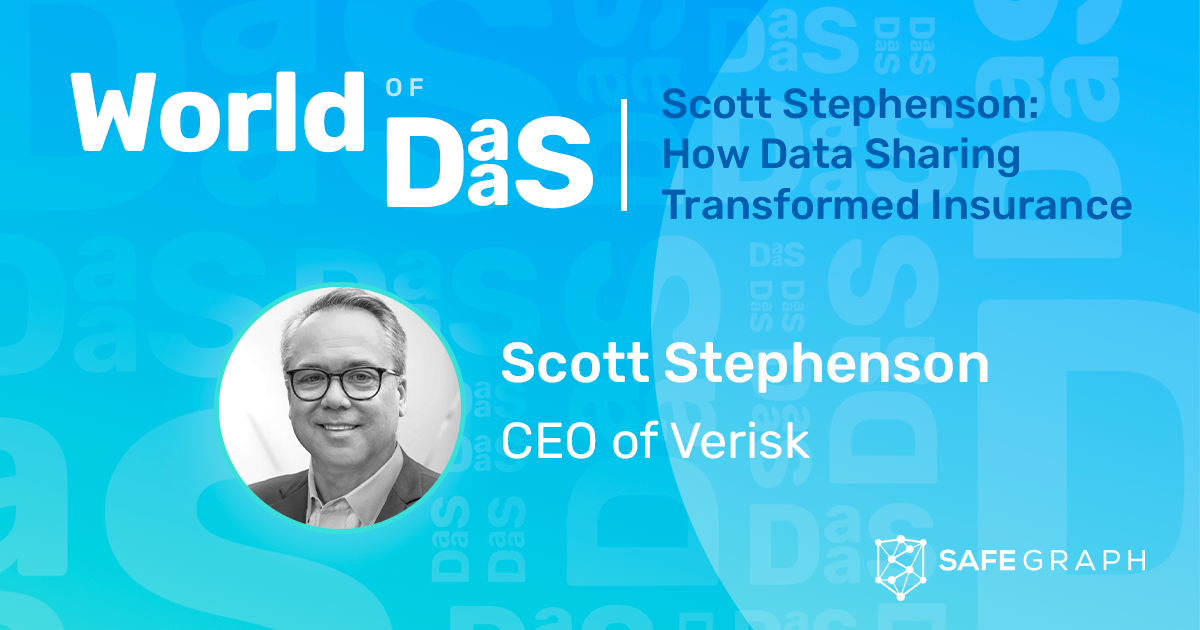
New podcast with Scott Stephenson, CEO of Verisk. Our conversation is available everywhere (Apple Podcasts, Spotify, YouTube, etc.). Please subscribe, follow, and review.
I am a huge fanboy of Verisk. They have one of the most powerful data co-ops and have built a $30 billion market cap behemoth. I really enjoyed diving into Verisk’s unique history and learning how it transformed Insurance through the power of data sharing.
Some learnings from our conversation:
Verisk Was Originally a Non-Profit Born Out of Regulation.
Verisk was originally called the Insurance Services Office or ISO and was founded as a nonprofit, in 1971 to serve a consortium of 280 or so insurance companies. Previously, insurance companies paid organizations in every state to act as an intermediary in handling, formatting, and QAing their data before it was handed off to the regulators. ISO was created as a national organization to handle this more efficiently.
Verisk Built Nearly Duplicative Datasets to Solve for Different Use Cases.
When all this data started coming together for insurance companies, it became obvious that it could solve a lot of problems. If you can imagine back in the day with fraud, you may have a fraudster submitting a similar claim to six different insurance companies. A central organization with all this data would be able to see similar claims from the same person, and it would be able to flag it. So a cooperative of insurance companies would have really great downstream effects. But this didn’t happen immediately. Verisk originally collected data for the purpose of understanding underwriting practices. Due to government regulation around data privacy, they had to build a second data set, nearly identical to their original asset, for the purpose of trying to root out fraud in the claims flows.
Data Contributory Models Are Really Hard to Achieve.
It’s really hard to get going in B2B because businesses see their data is an asset. The US property and casualty insurance industry has the most established data cooperative. Outside of insurance, there are very few industries with strong examples. Verisk had the benefit of regulatory requirements.
Another way to jumpstart a data coop — ZoomInfo used exhaust data. Check out my conversation with ZoomInfo CEO, Henry Schuck.
When Successful, Data Cooperatives Are Really Economically Powerful.
Data cooperatives are incredibly powerful. Verisk’s customers greatly benefit from collective information. A single customer would not have anywhere close to the data asset that Verisk created. And it’s much cheaper for them to participate in Verisk’s contributory model than build a solution on their own.
Hope you enjoy this episode of World of DaaS — would really appreciate it if you subscribe and review Apple Podcasts, Spotify, YouTube, etc.).